
Most Asian currencies traded cautiously on Thursday following the widely anticipated Federal Reserve rate cut, as investors assessed the central bank’s hawkish tone and outlook.
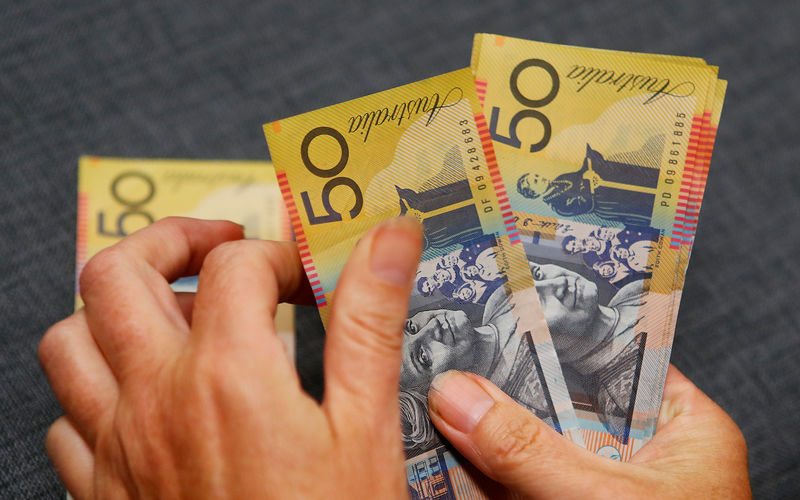
By bucking the regional trend, the Australian dollar fell following an unexpected decline in the country’s labor market. Meanwhile, the Indian rupee returned to record lows amid capital outflows.
The USD index fell 0.1% after falling 0.4% following the Fed’s decision. USD index futures were also trading 0.1% lower as of 7:32 AM Moscow time.
Fed Cuts Rates with a Hawkish Slant
The Federal Reserve cut its benchmark interest rate by 25 basis points to a target range of 3.50-3.75%, marking the third cut in this cycle.
Three policymakers expressed dissent, two preferring no rate change, and one calling for a deeper cut. Fed Chairman Jerome Powell described the decision as “insurance” against the backdrop of a cooling labor market, while emphasizing that further rate adjustments are not on a predetermined path.
He signaled that the central bank will remain vigilant on inflation, maintaining a cautious approach in its forecasts.
“Considering the scatter plot of individual forecasts, the median forecast is for only one further rate cut in 2026, consistent with previous forecasts from September,” ING analysts noted.
“Looking at the forecasts, the hawkish bias is clear,” they added.
The Japanese yen (USD/JPY) fell 0.1%, while the Singapore dollar (USD/SGD) rose 0.1%.
The South Korean won (USD/KRW) rose 0.3%.
In China, both the domestic yuan (USD/CNY) and offshore yuan (USD/CNH) remained unchanged.
The Australian dollar falls after weak employment data
The Australian Bureau of Statistics reported a 21,000 decline in employment on Thursday, with a sharp drop in full-time jobs, although the unemployment rate remained stable at 4.3%.
The unexpected weakness complicates the Reserve Bank of Australia’s case for a rate hike anytime soon, despite persistent inflation pressures.
The Australian dollar (AUD/USD) pair fell 0.6%.
The Indian rupee returned to record lows.
The Indian rupee also came under pressure, falling below 90 per dollar amid renewed capital outflows and liquidity concerns.
The USD/INR pair was last trading 0.6% higher at 90.3 rupees, approaching last week’s record high of 90.5 rupees.
Analysts cited foreign investor selling and domestic demand for dollars as key factors behind the weakness.